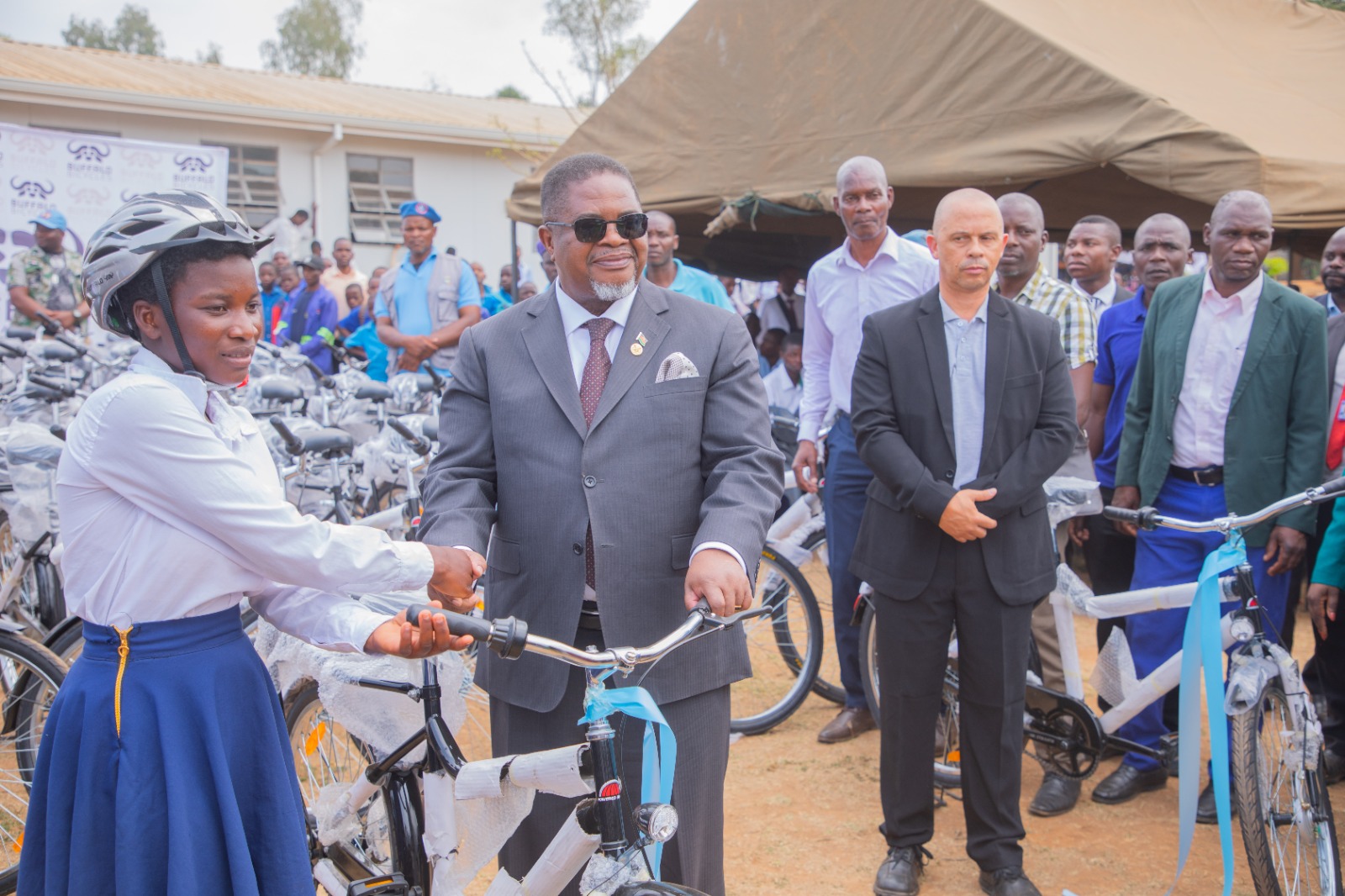
Minister of Education, Science and Technology Hon. Bright Msaka SC has launched a project that will provide 13,500 bicycles to vulnerable learners across Malawi as part of efforts to improve school attendance and reduce girls’ vulnerability to child marriage.
The “Mobility’s Role in Reducing Child Marriages” project is being implemented by CAMFED in partnership with World Bicycle Relief (WBR), with funding support from the Children’s Investment Fund Foundation (CIFF).
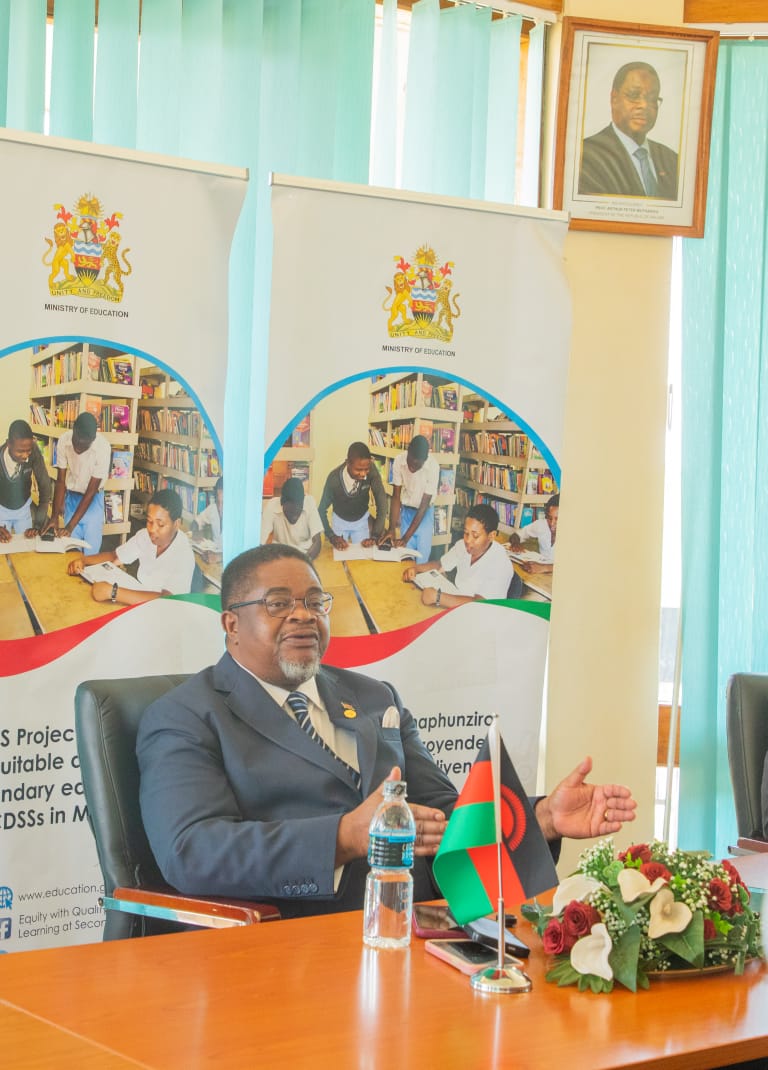
Speaking during the launch at St Anthony Community Day Secondary School (CDSS) in Zomba on Monday, Msaka said the initiative was not simply about distributing bicycles, but removing barriers that prevent children, particularly girls, from accessing and completing their education.
He said long distances between homes and schools remain a major challenge for learners in rural communities, with some walking several kilometres to attend classes.
According to the Minister, such journeys can contribute to absenteeism, lateness, fatigue, reduced study time and school dropout, while also increasing girls’ vulnerability to early pregnancy and child marriage.
Under the initiative, 13,500 Buffalo Utility S1 bicycles will be provided in Malawi, forming part of a wider 17,250-bicycle initiative covering Malawi and Kenya.
Msaka said Government expects the initiative to contribute to improved school attendance and completion, reduced absenteeism and lateness, increased study time, and reduced vulnerability to early marriage and adolescent pregnancy.
World Bicycle Relief Managing Director Anthony Kinnaird said the launch of the Mobility’s Role in Reducing Child Marriages Project demonstrates what can be achieved when government, development partners, communities and civil society organisations come together with a shared commitment to transforming lives.
Kinnaird said mobility challenges are often greater for girls, as long and unsafe journeys to and from school can increase their vulnerability to harassment, absenteeism, school dropout, early pregnancy and child marriage.
According to Kinnaird, these barriers do not only affect individual learners but can also limit the development potential of entire communities.
McKnight Kalanda, Board Chairperson of CAMFED, said the intervention is linked to efforts to reduce child marriage by helping girls remain in school and access opportunities that can shape their future.
He, however, noted that bicycles alone cannot end child marriage, stressing that families, communities, schools, traditional leaders, government and civil society all have a role to play in creating an environment that supports girls to stay in school.
He further called on parents, schools, CAMA members and communities to ensure the bicycles are properly maintained, safely used and remain with the intended beneficiaries.
Kalanda said the focus should ultimately be on seeing girls attend school consistently, spend less time travelling and progress towards their aspirations.