Minister of Education, Science and Technology, Honourable Bright Msaka SC, has called for increased investment in science education, saying scientific knowledge, research and innovation are critical to achieving Malawi’s development aspirations under Malawi 2063.
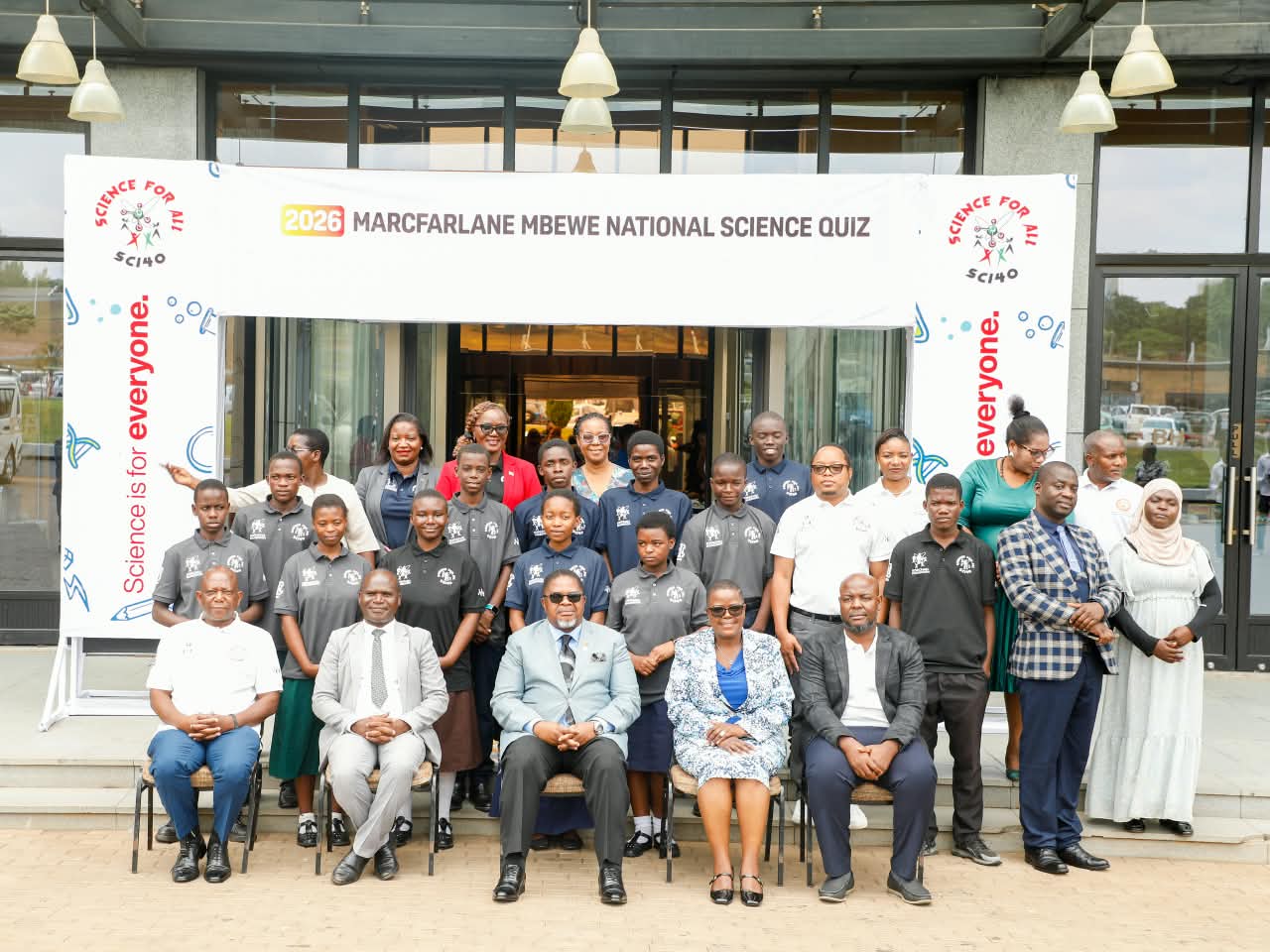
Speaking during the 2026 MarcFarlane Mbewe National Science Quiz organised by the Science for All Foundation on Saturday in Lilongwe , Msaka said science, technology and innovation remain central to economic transformation, as they equip young people with skills to develop solutions to societal challenges.
He said Government continues to prioritise equitable access to quality education, improved learning outcomes and the strengthening of Science, Technology, Engineering and Mathematics (STEM) education to nurture a highly skilled and innovative population.
Msaka said science education plays an important role in developing curiosity, creativity, critical thinking and problem solving skills, which are essential for building a modern and competitive economy.
He observed that challenges such as climate change, public health concerns and youth unemployment require innovative solutions that can emerge through scientific inquiry, technological advancement and research.
The Minister commended the Science for All Foundation for promoting scientific literacy and curiosity among learners through science clubs, mentorship programmes, career guidance and practical learning experiences.
Msaka also acknowledged the contribution of the Malawi Liverpool Wellcome Programme (MLW) in strengthening scientific capacity and generating research evidence that informs policy and improves people's lives.
He said collaboration between research institutions and educational establishments is important in exposing learners to the practical application of science and encouraging them to pursue careers in scientific research and innovation.
Speaking at the event, Science for All Foundation Chief Executive Officer Daniel Mumba said the organisation nurtures scientific talent from grassroots level by identifying young secondary school learners and mentoring them throughout their development into scientists.
Mumba said the foundation had observed considerable scientific talent across the country and was working to connect its programmes with the Ministry's priorities, particularly in gender and education, to help translate those priorities into practical outcomes.
The competition brought together learners from all six education divisions, including National Secondary Schools and Community Day Secondary Schools.