Deputy Minister urges girls to lead Malawi’s future as inclusive education summer camp closes in Machinga
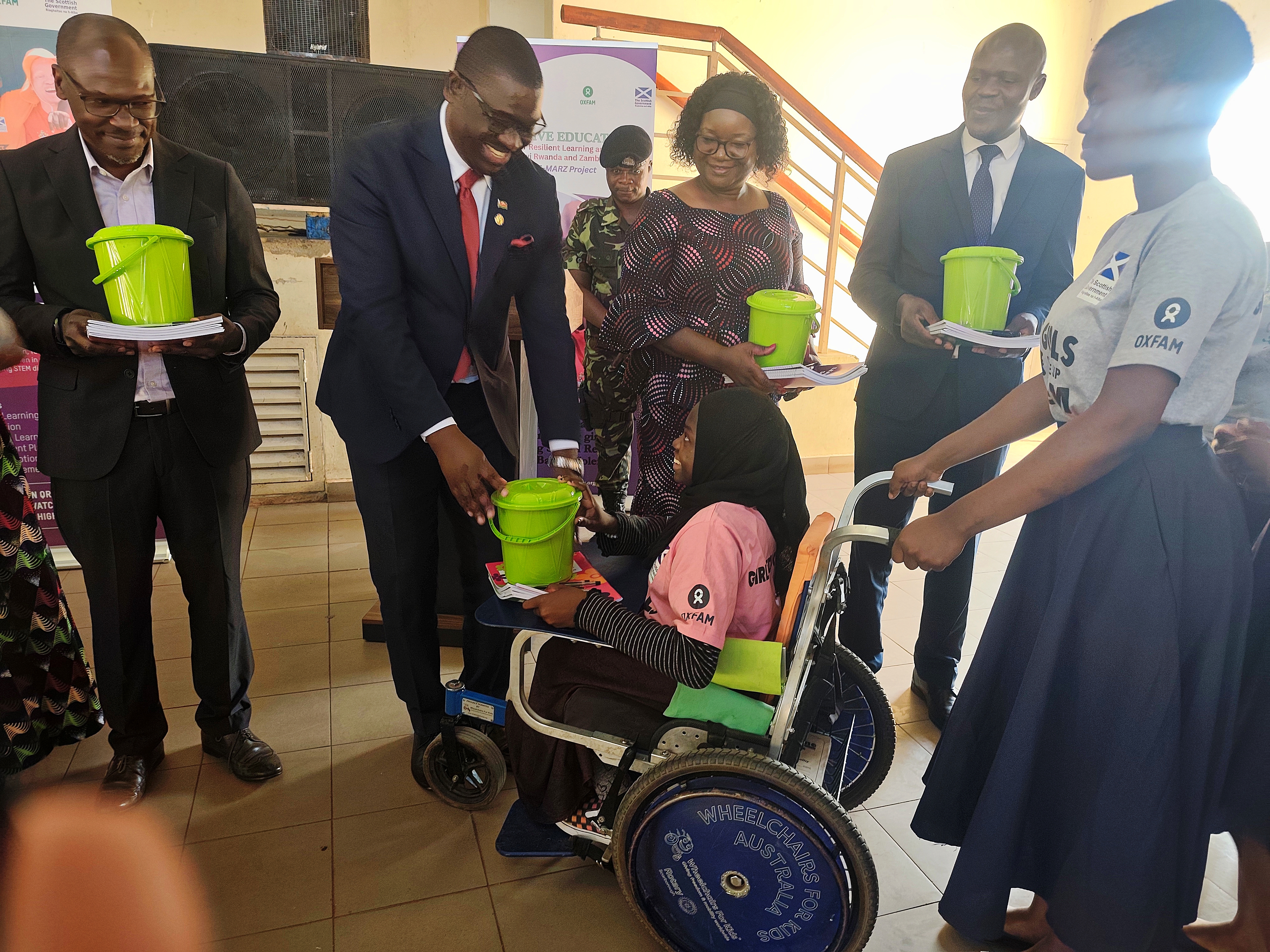
The Girls Education Summer Camp, organised by Oxfam in partnership with the Scottish Government, has closed at Machinga Teachers Training College, bringing together 110 girls from 11 secondary schools in Balaka and Machinga districts.
The camp is part of the Girls’ Initiative for Resilient Learning and Support in Malawi, Rwanda and Zambia (GIRLS-MARZ) project, which supports girls with disabilities and those from ultra-poor households through mentorship and role modelling while encouraging their participation in science, technology, engineering and mathematics (STEM).
Speaking at the closing ceremony, Deputy Minister of Education, Science and Technology, Hon. Francis Folley, MP, highlighted Malawi’s efforts to advance girls’ and inclusive education.
He cited initiatives and policies including Free Primary Education, the School Readmission Policy for teenage mothers, the National Girls’ Education Strategy, the Malawi Partnership Compact (2023–2027), and the Inclusive Education Strategy, which is aligned with Malawi 2063.
“Education is not only a fundamental right but also a powerful tool for national transformation. By empowering girls, we empower families, communities and the nation,” said Folley.
He encouraged the girls to build on the resilience, leadership and courage gained from the camp, support one another and become agents of change in advancing Malawi 2063.
The Deputy Minister also encouraged the organisers to consider including boys in future initiatives to promote greater gender equity.
He thanked Oxfam and the Scottish Government for their continued partnership in ensuring that no child is left behind.
Malawi Scottish Partnership CEO Linda Dembo said the project is currently supporting 500 girls, including 110 teenage mothers who have returned to school, through an inclusive education approach.
One of the participants, Lauren Phiri, said the camp had helped her build confidence in her abilities, learn from role models in different professions and understand how to respond to gender-based violence.
The five year project provides financial and practical support, including tuition fees, solar lamps, bicycles, school uniforms and counselling, to help girls remain in school and pursue their education.